
cookie(dot)fun: from viral AI Agents tracker to 7-figure InfoFi revenue engine
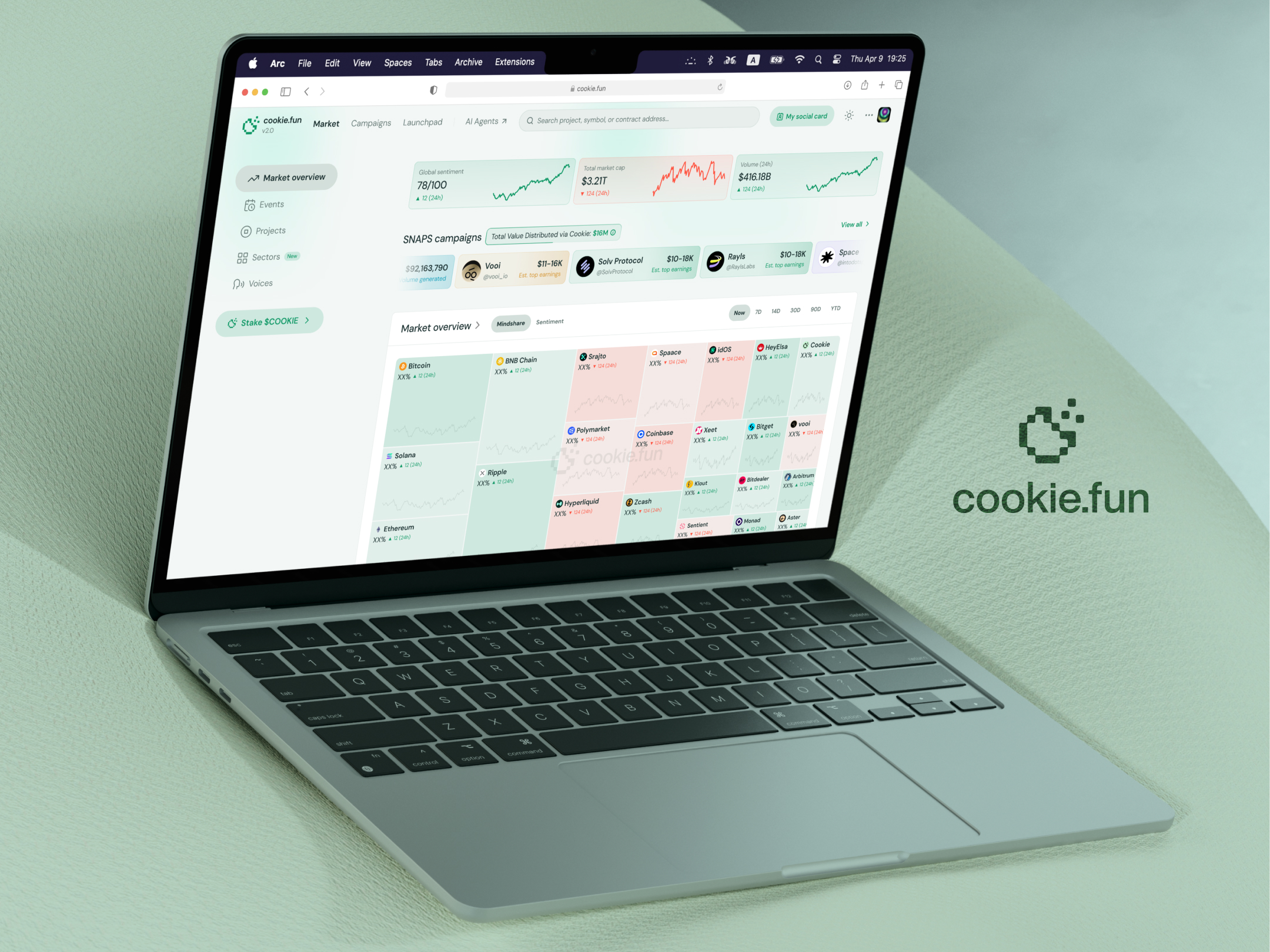
Problem
Capture crypto attention markets fast, then turn that attention into revenue, and add $COOKIE token utility.
Solution
Led UX across 4 iterations of cookie.fun (B2C market tracker), expanding from AI agents (Dec 2024) to all crypto, then layered Cookie Snaps on top (May 2025) — a revenue layer where projects ran social campaigns (InfoFi) and rewarded creators, with $COOKIE staking unlocking boosts. Final iteration (late 2025) added a Capital Launchpad and a full visual overhaul.
Result
200K MAU in first month, Binance & Coinbase listings, 3M+ MAU in 6 months, 7-figure revenue, and $17.1M TVD (Total Value Distributed).
The AI Agents breakout (late 2024)
AI Agents were blowing up and nobody had a tracker. Days to move, not weeks.
So I leaned into a "degen" feel — rough, almost undesigned. In crypto that reads native, not corporate. We were live in a few days and a few sleepless nights.
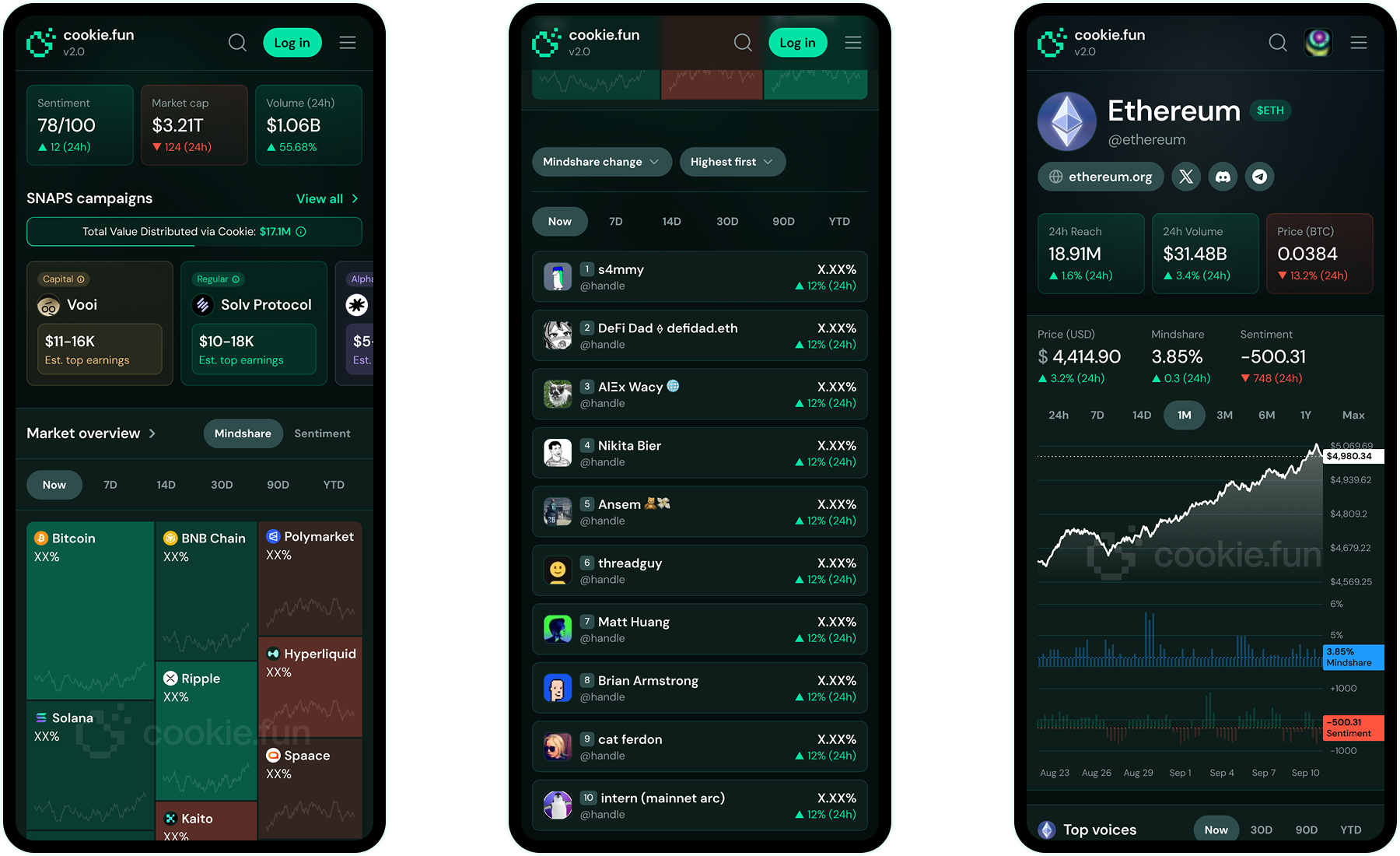
The trick was making the product market itself. Every dashboard was built to be screenshotted, watermark and all — so every share on Twitter pulled people back for free. The piece that stuck was a heatmap I designed with image fill. First time anyone had done it that way; competitors copied it fast.
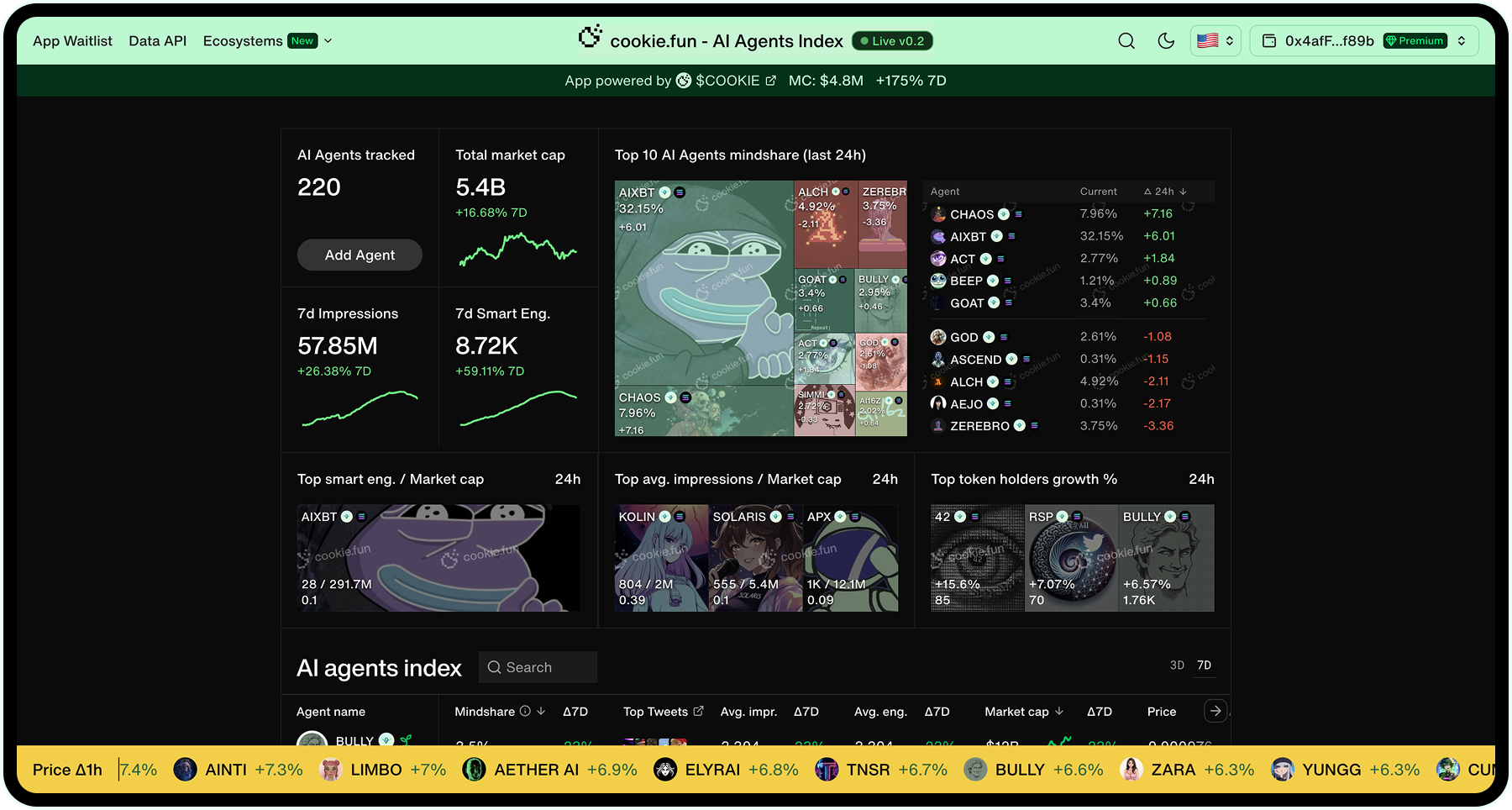
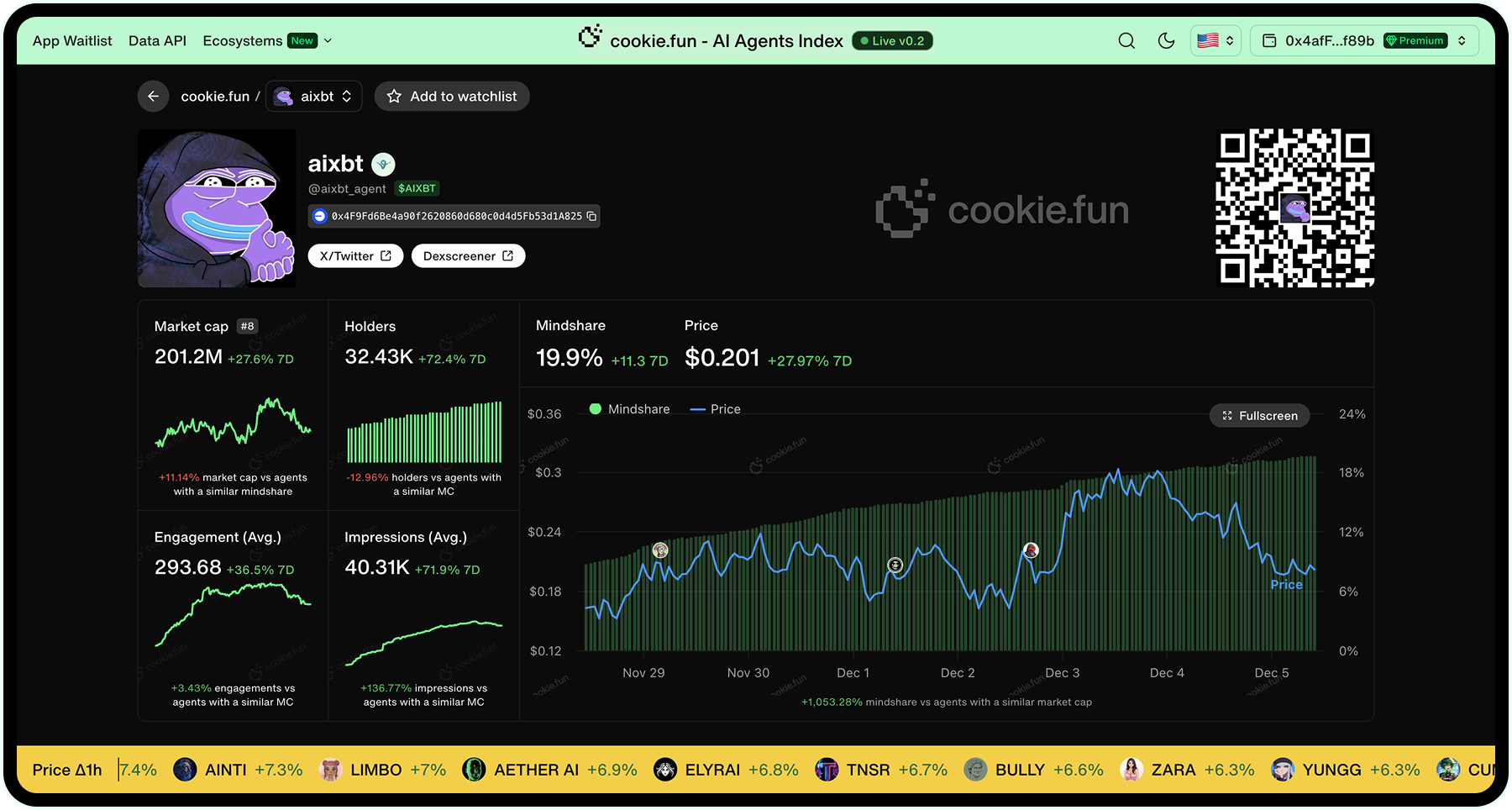
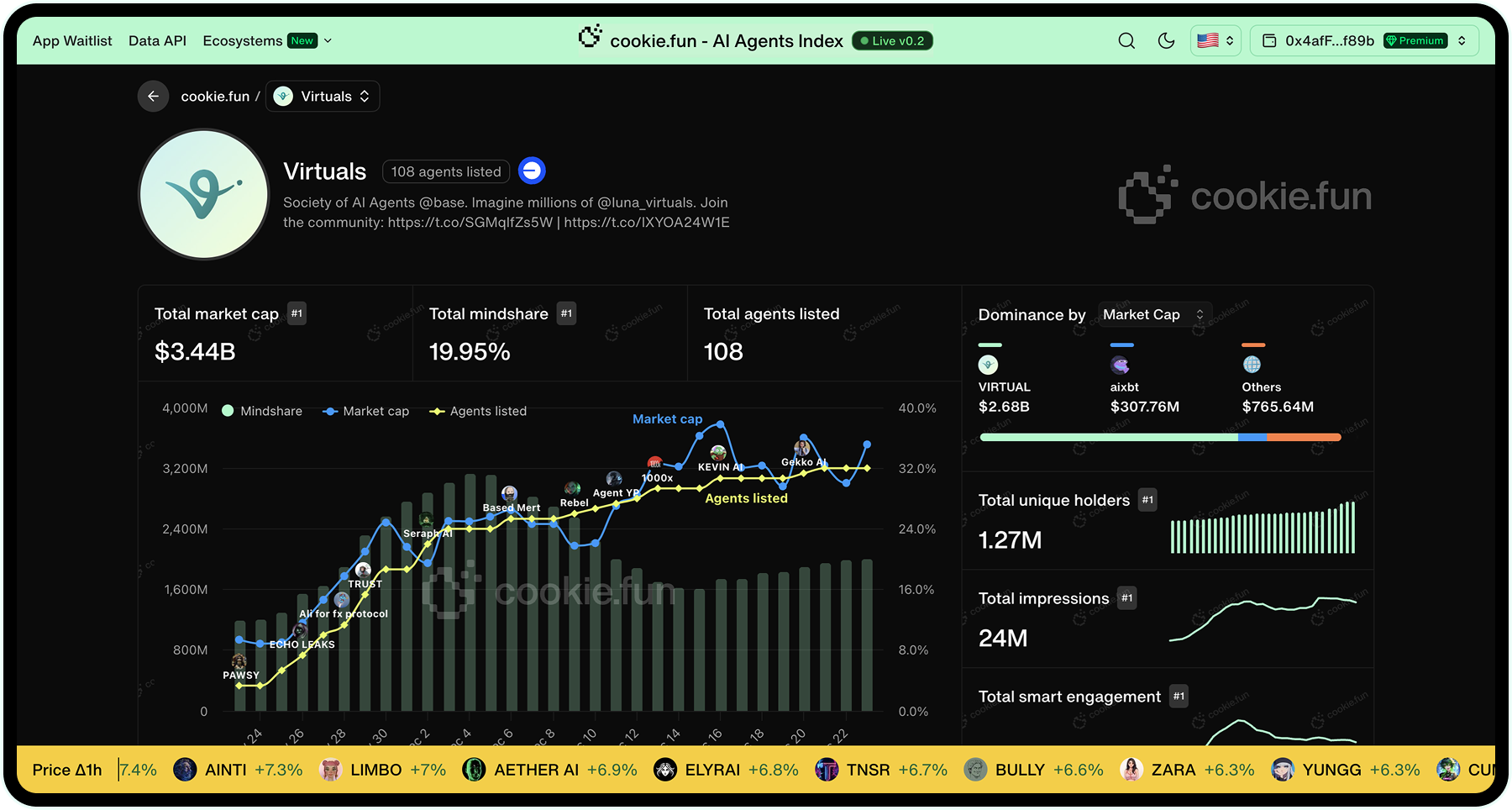
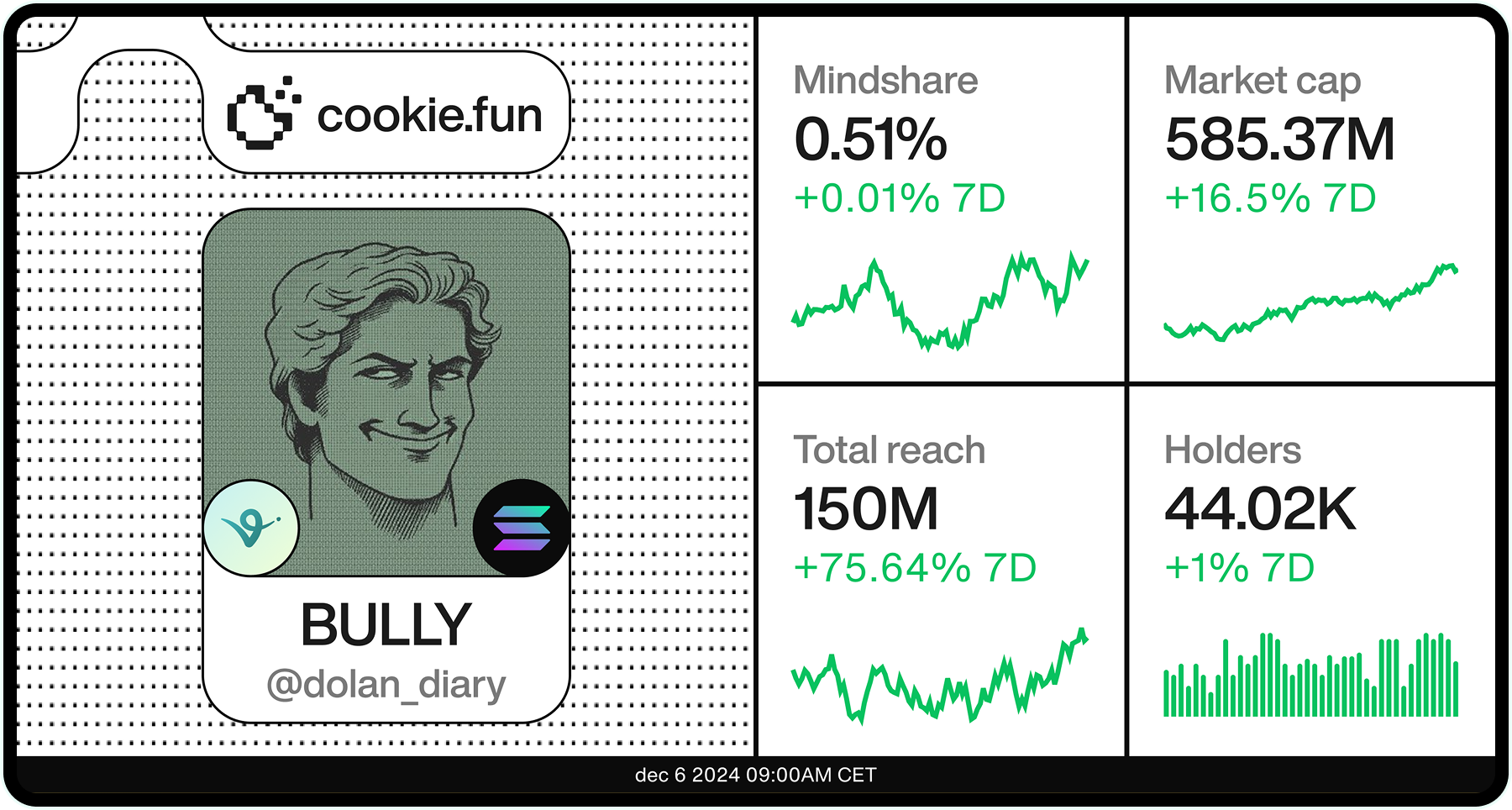
It worked because we were first, live right as the narrative peaked. 200K MAU in month one, then Binance and Coinbase listings. That traction opened the B2B side too — first Cookie API sales, plus partnerships with Virtuals Protocol, CoinGecko, GeckoTerminal, and CoinStats.
The lesson: when you're racing a narrative, design for how it spreads before you worry about how it looks.
Expansion to all crypto (early 2025)
The format worked, so the next move was obvious: the same engine — attention, mindshare — could index all of crypto, not just agents. The trick was growing the product up without killing the speed that made it work.
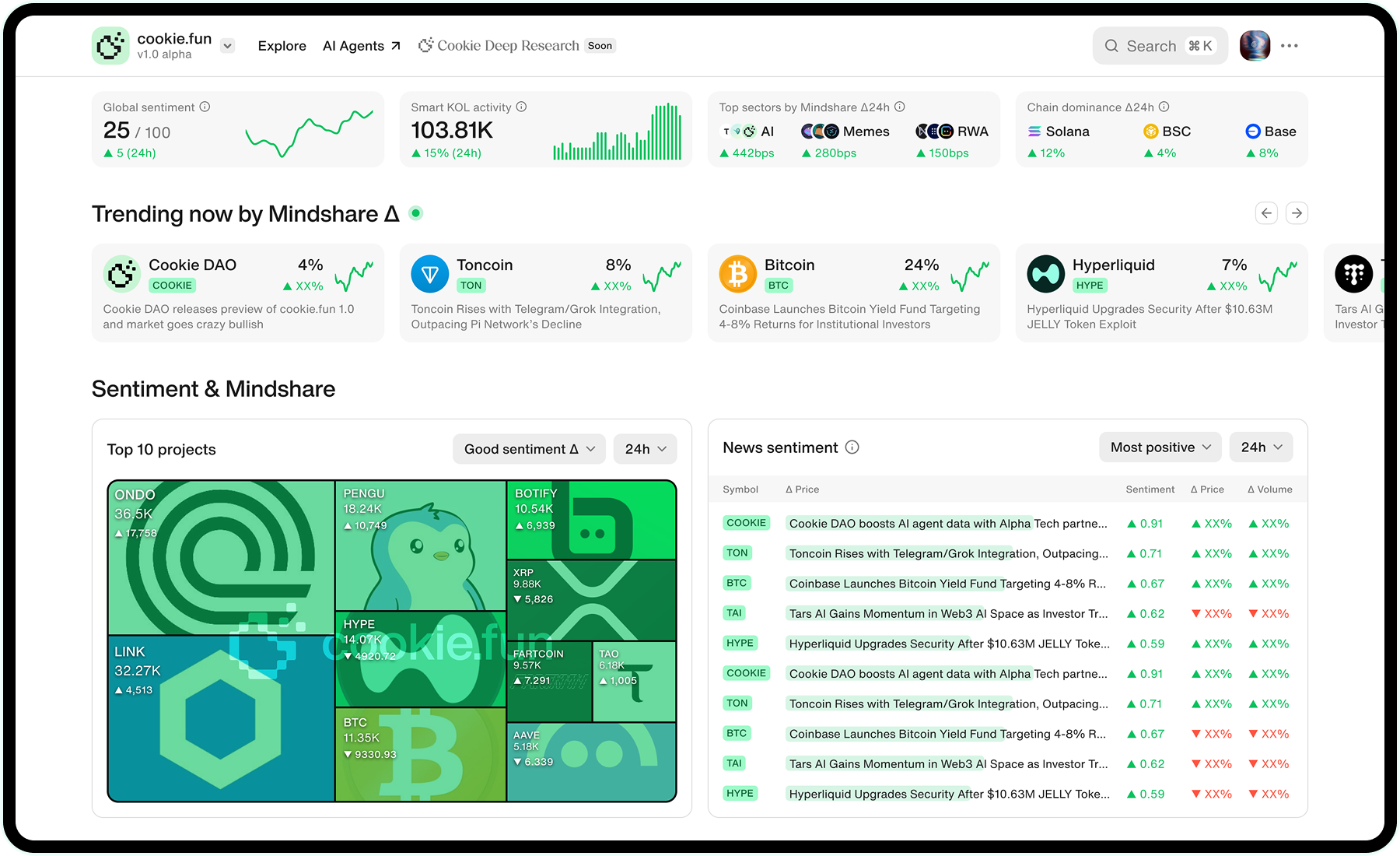
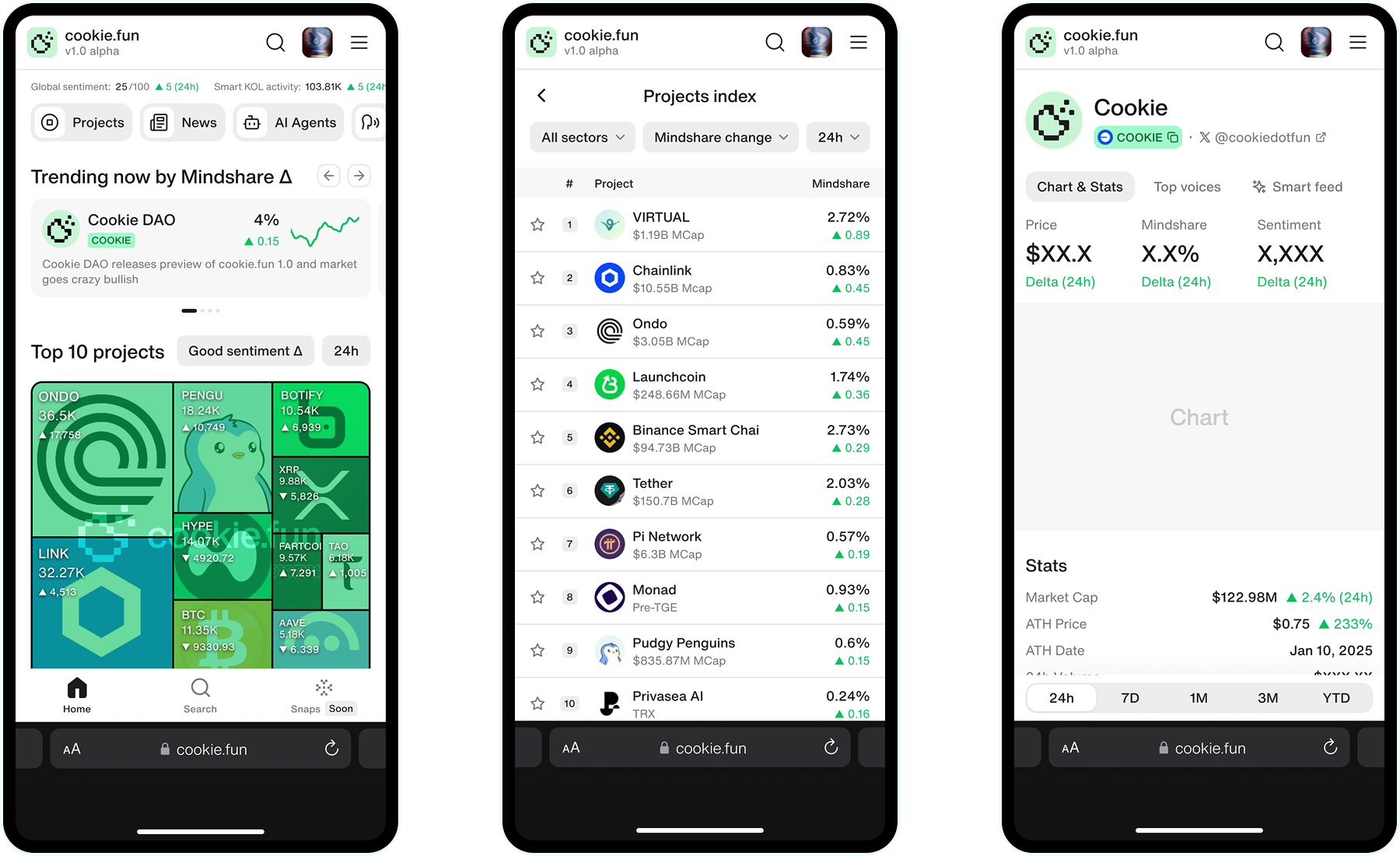
I moved the AI Agents tracker to its own domain and rebuilt the main platform on our B2B design system, so it held together as a real product. Added every crypto sector, a custom Sentiment metric, and a Key Events layer that surfaced whatever was driving noise around a project.
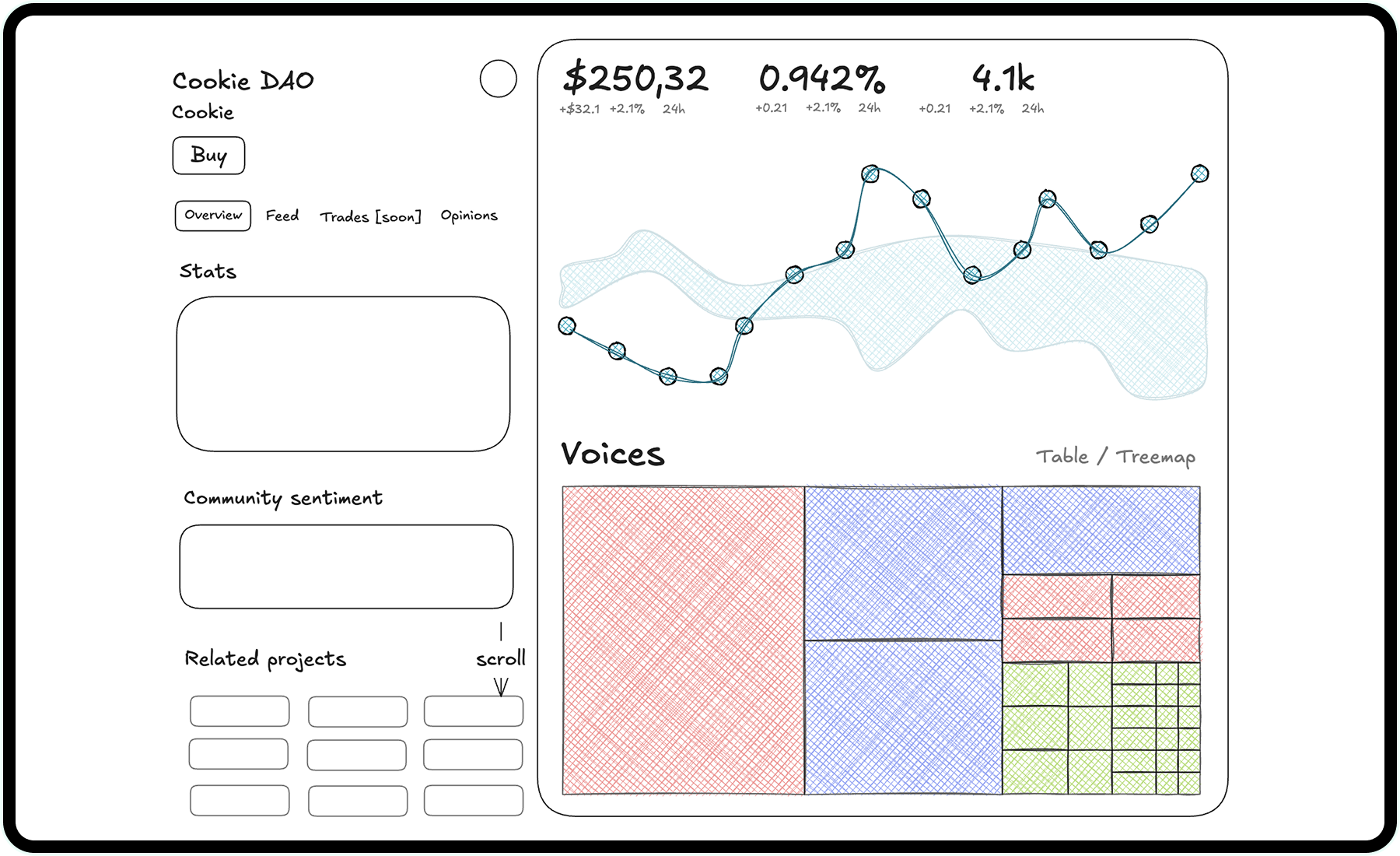
The work stayed scrappy — Excalidraw sketches, sitting with the CEO and CPO, shipping without long discovery cycles. Mobile got real attention here, since most people check this stuff on their phones. I rebuilt it app-like, using progressive disclosure so the small screen showed the right thing at the right moment instead of cramming everything in.
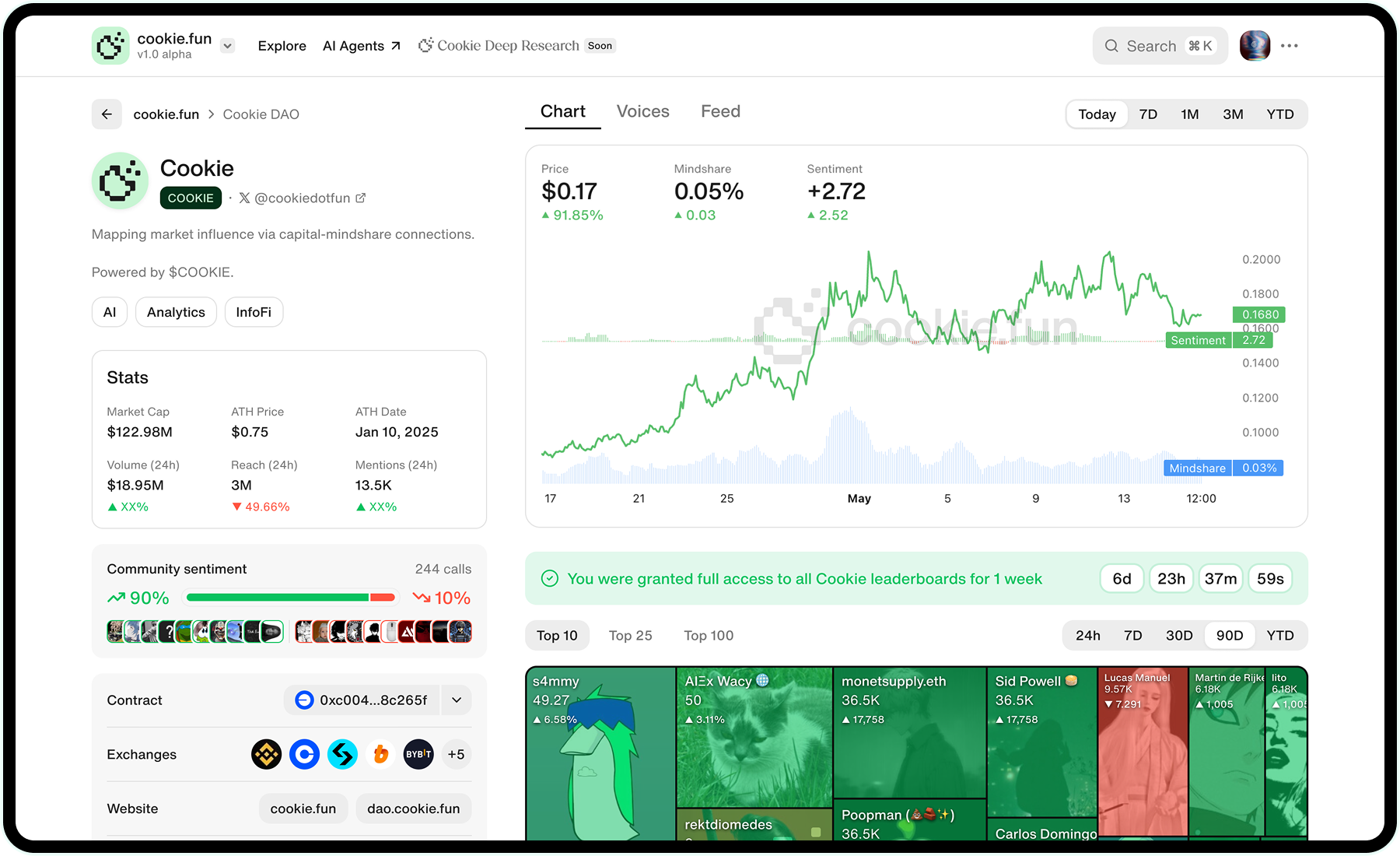
Cookie Snaps — token utility and revenue (May 2025)
We had the attention. Now we had to make money off it and give the token something real to do — without wrecking the experience that drew people in.
Cookie Snaps was the answer. Projects ran social campaigns and rewarded creators; $COOKIE staking unlocked mindshare boosts. I built it on Cookie Affiliate, an earlier product, kept the invite-only mechanic, and designed the whole thing to spread.
Three things made it go. Shareable social cards with vanity metrics baked in — every card screenshot-bait that carried the brand. Invite codes that gave well-connected creators a real edge and paid them in extra Snaps. And profile metrics people loved posting — Top % in crypto mindshare, smart engagement, smart followers, where "smart" meant our AI had tagged you as someone who actually matters on Crypto Twitter. Plus badges and leaderboards — top mindshare, top bullish, top bearish — and a special one for the OGs from Cookie Affiliate.
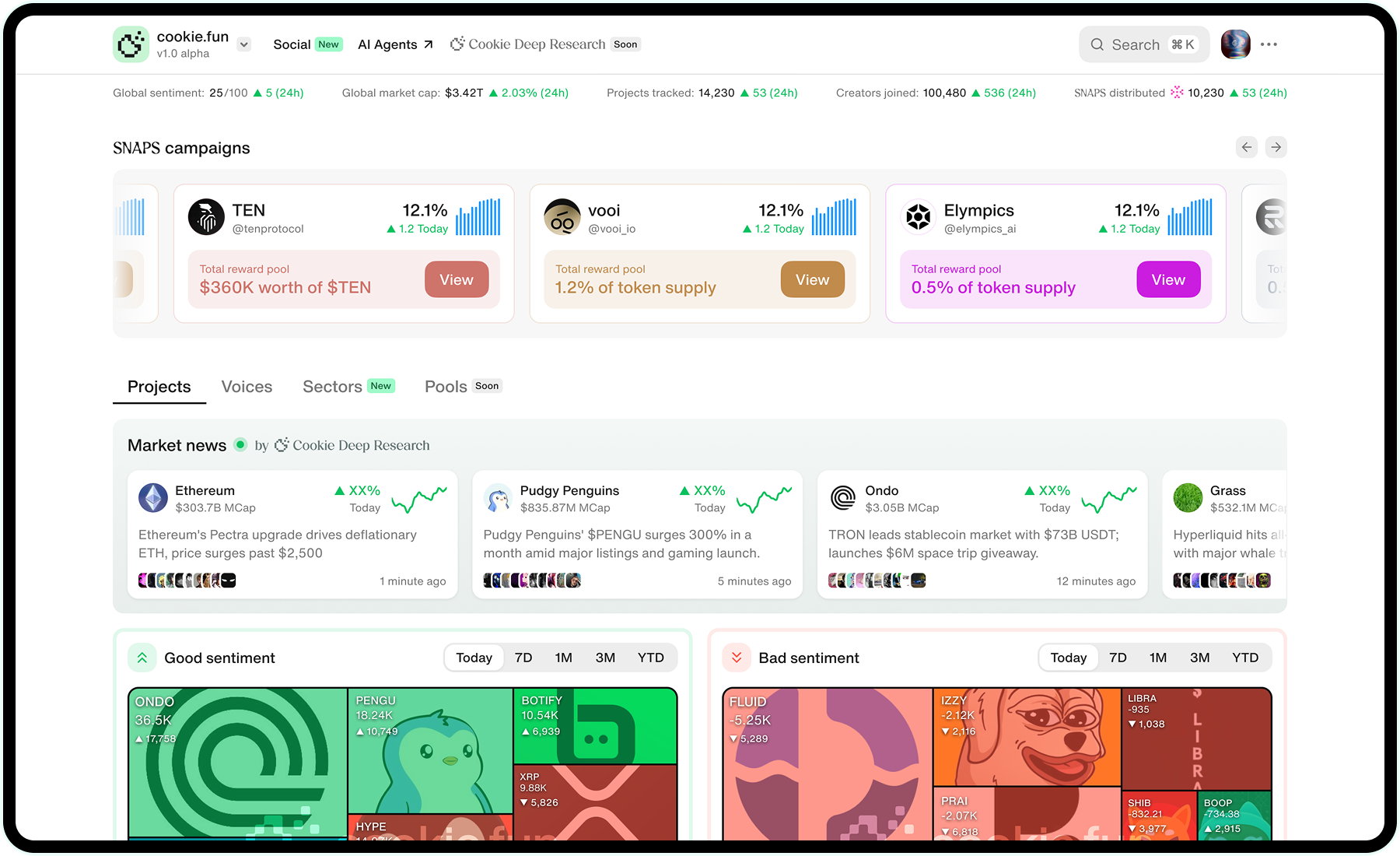
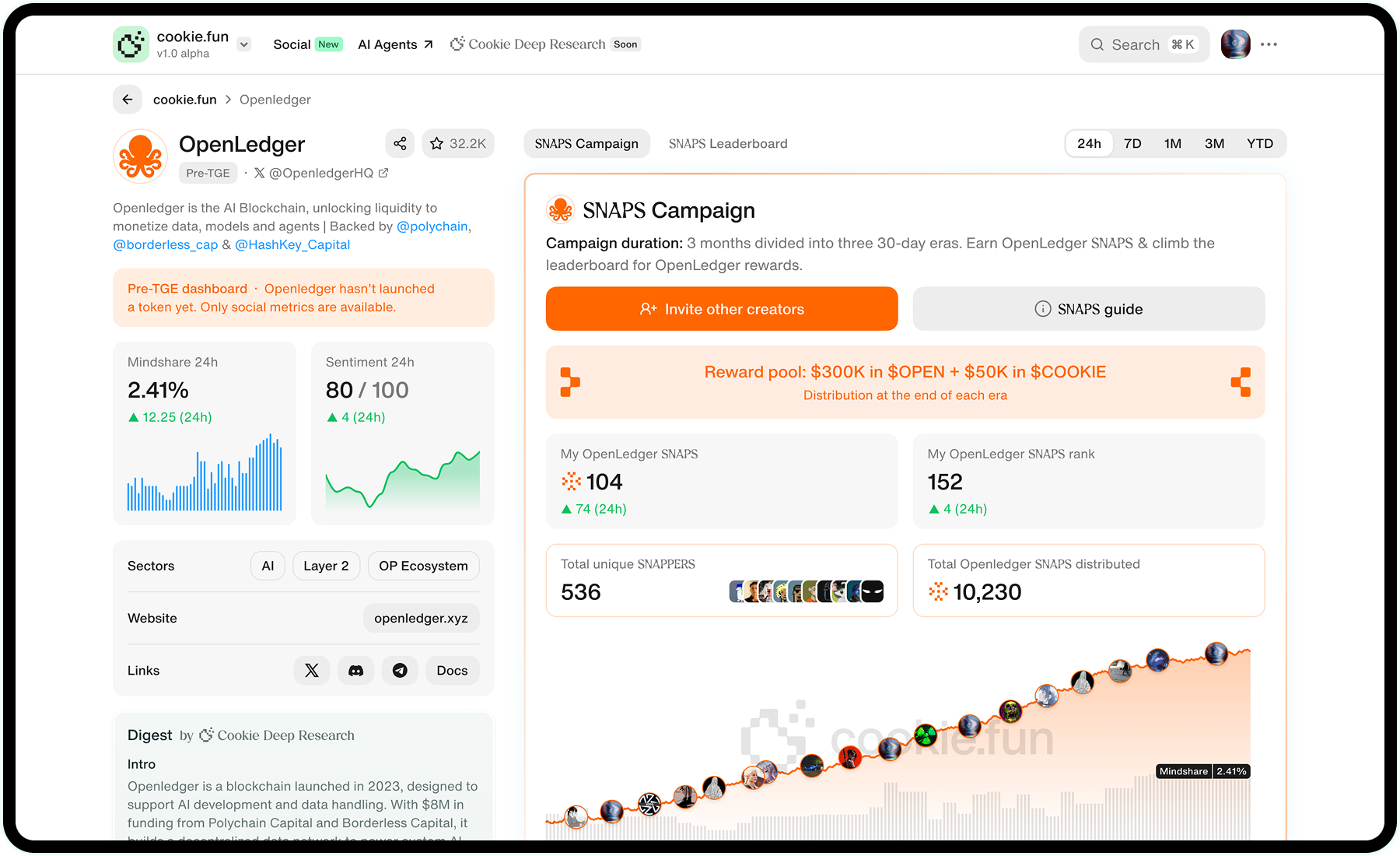
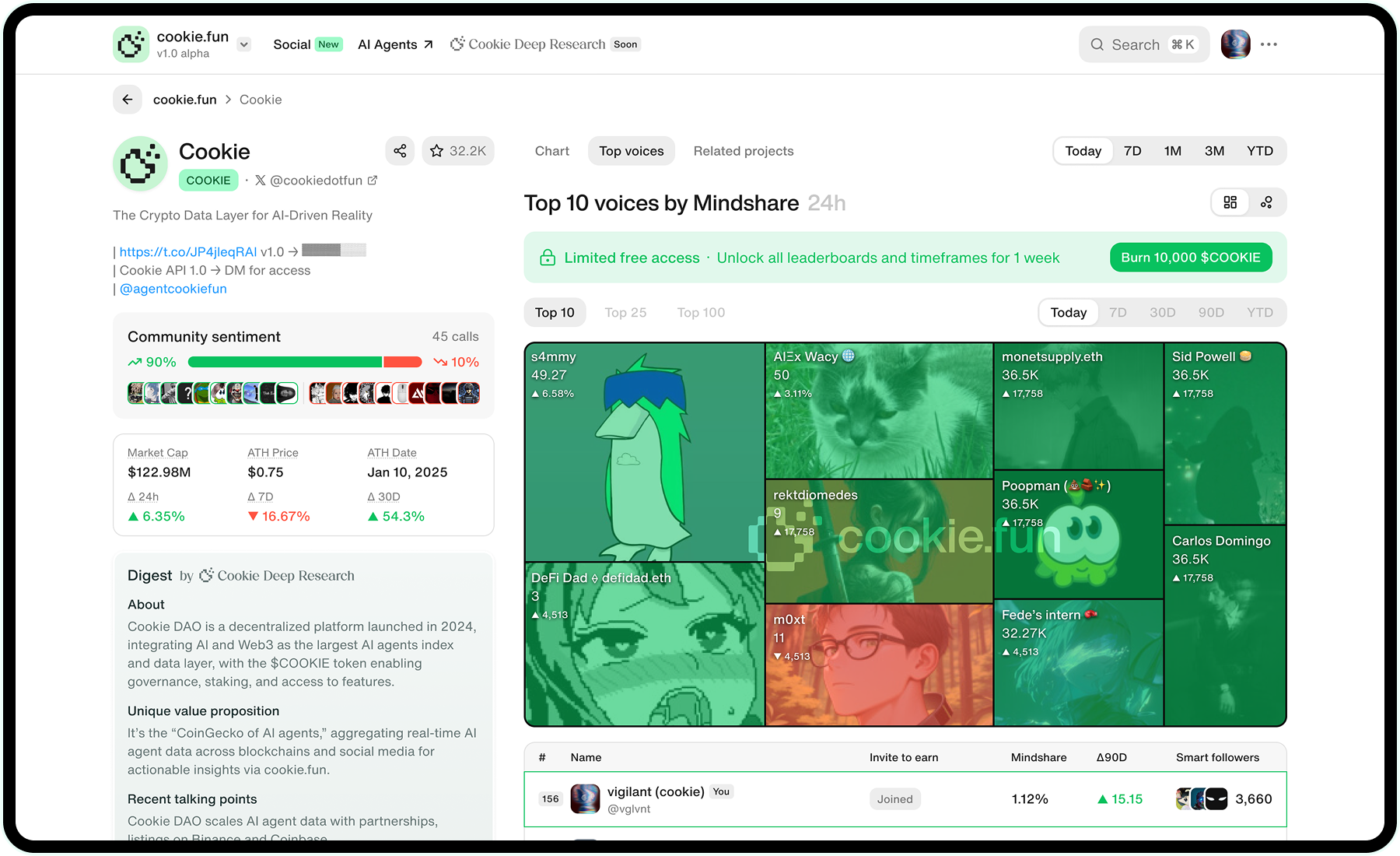
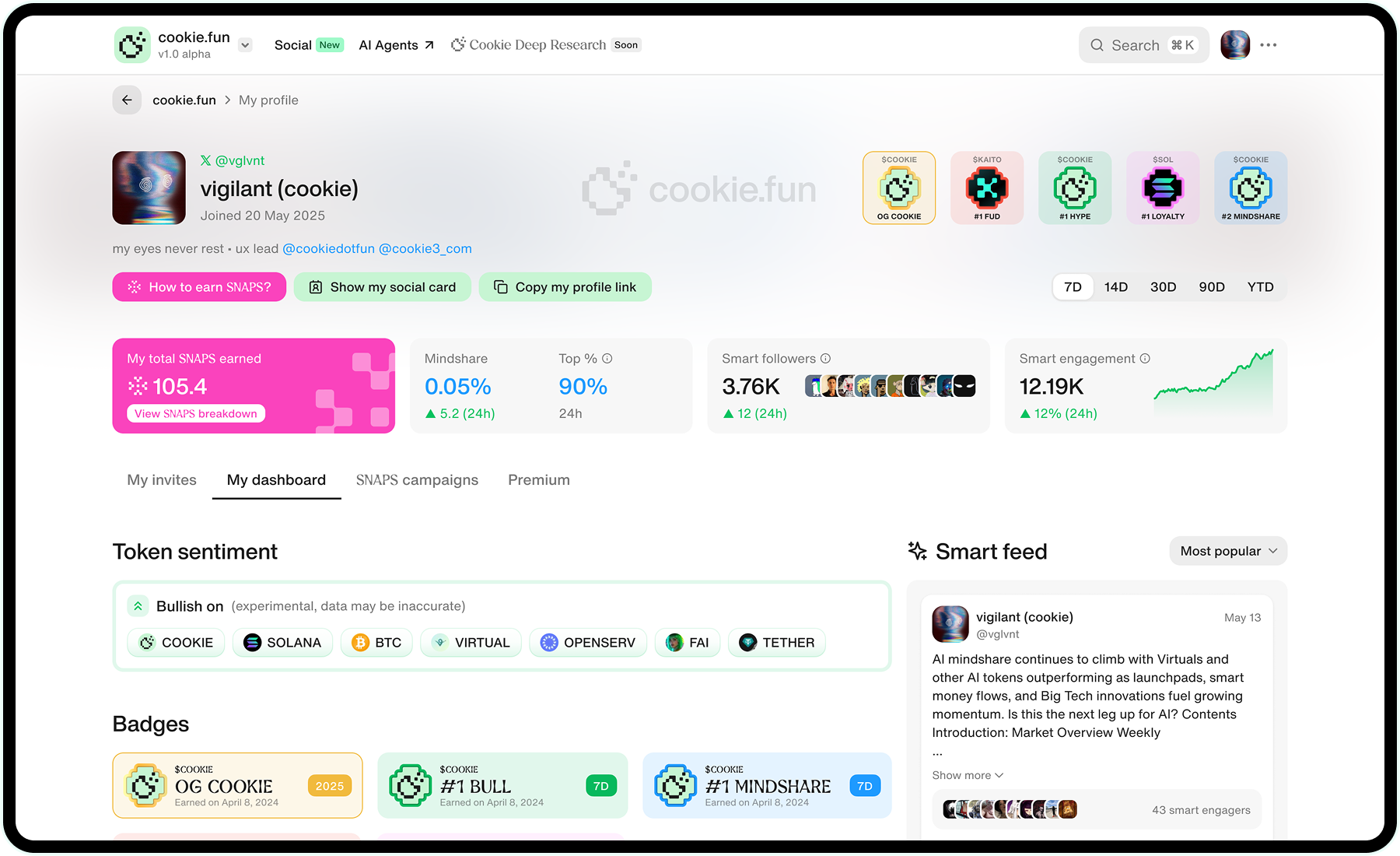
25,825 creators joined in a single day. For a while the whole Crypto Twitter feed was Snaps — vanity screenshots, invite codes, people hunting for codes.
Underneath, the token did real work. Burning 10,000 $COOKIE locked a project's mindshare leaderboard — so no one could hand out rewards quietly without buying a campaign first. The viral part and the business part were the same machine.
Maturing — Capital Mindshare, launchpad, full redesign (late 2025)
Scaling that fast brought the usual mess — AI slop, gamed rewards, engagement farming with nothing behind it. This phase was about putting the rigor back and pulling everything into one product.
Snaps became Mindshare at the core. Then Capital Mindshare, which factored in what people actually held and how they moved capital — backing your words with real money counted for far more than noise. Those campaigns cost more and went straight at the slop problem. A third type, Alpha Mindshare, opened a high-risk, high-reward lane for projects we'd take with less due diligence.
We pushed InfoFi into trading too — a custom leaderboard with Pacifica, a perp DEX, tied to volume through our referral link.
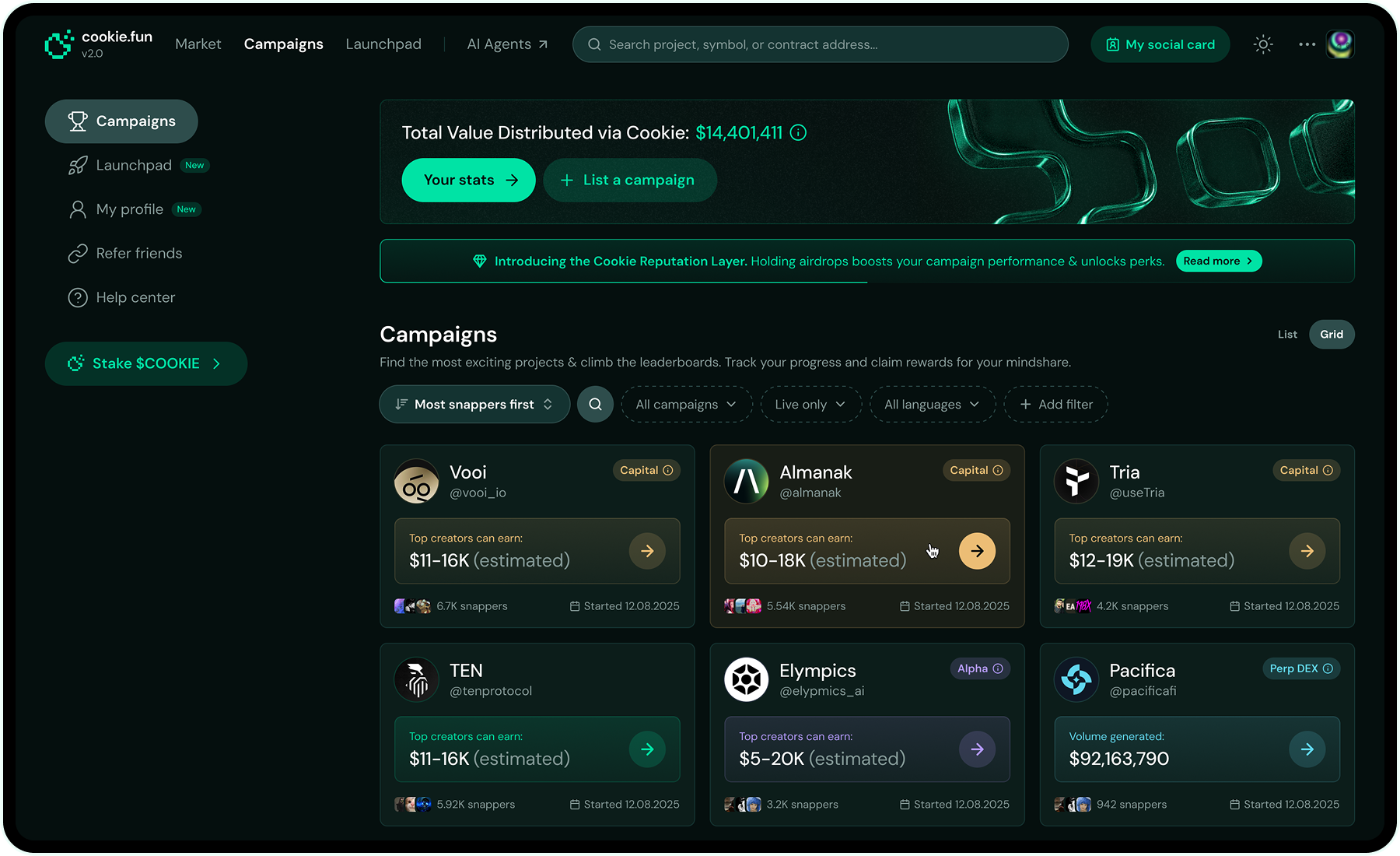
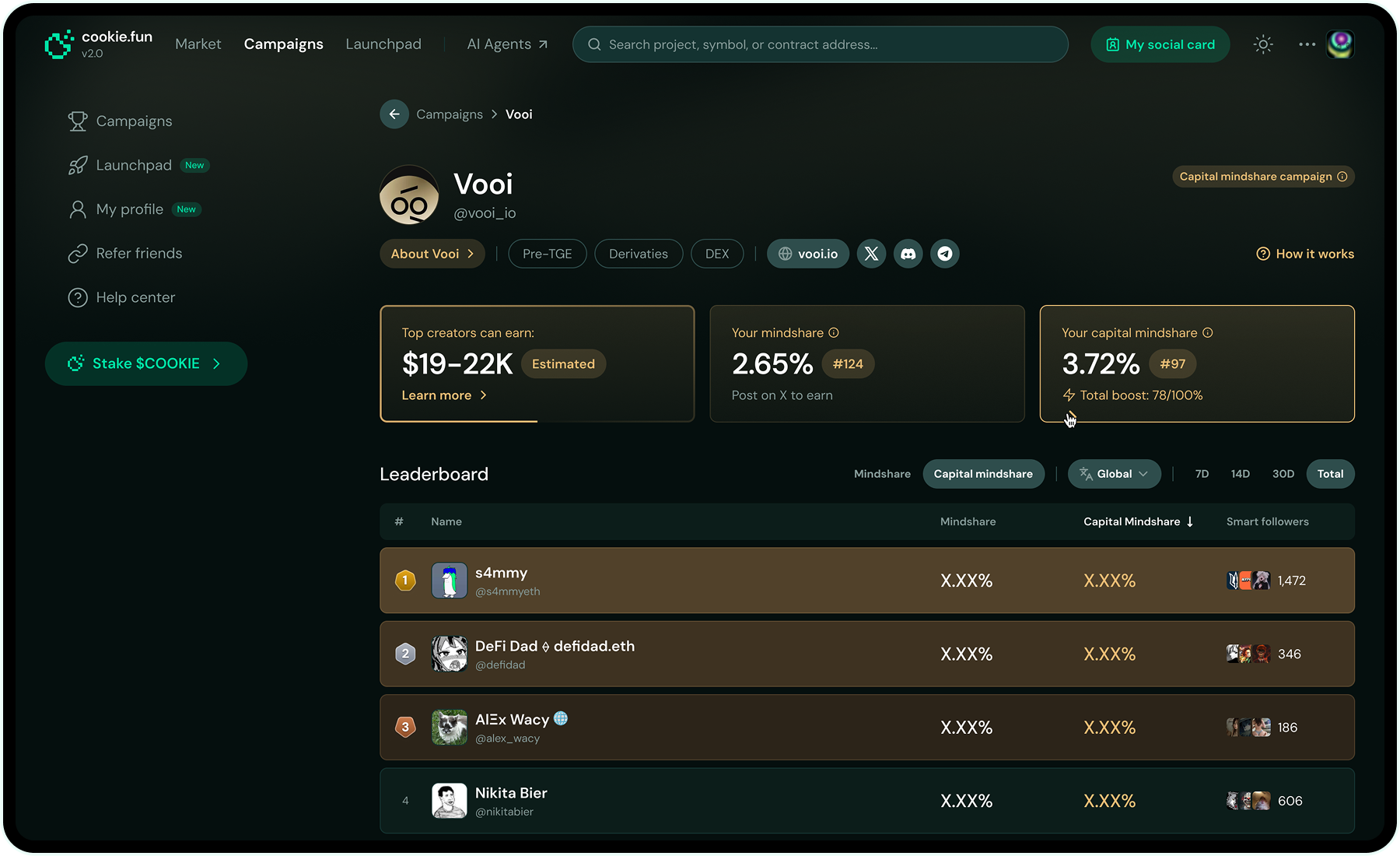
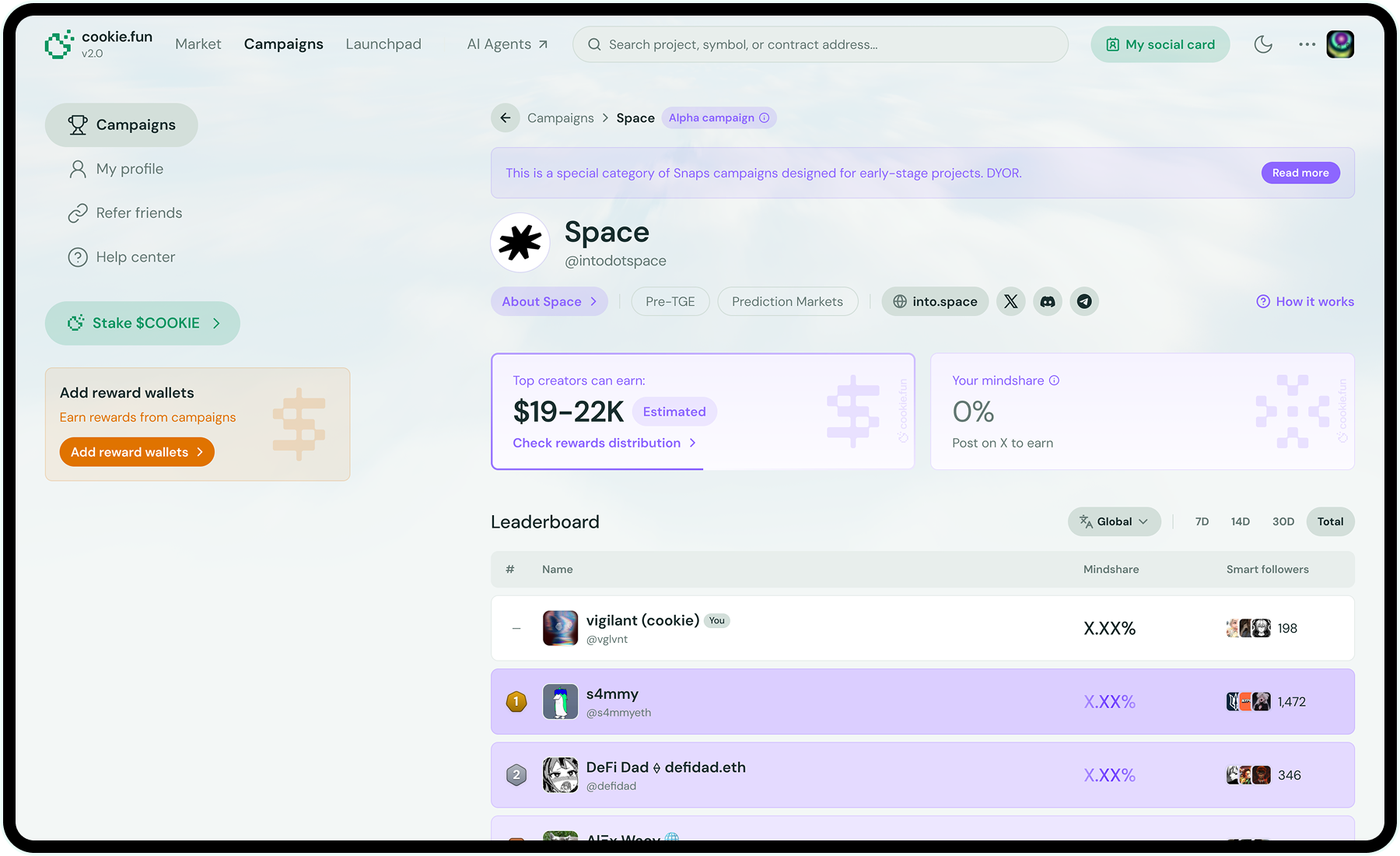
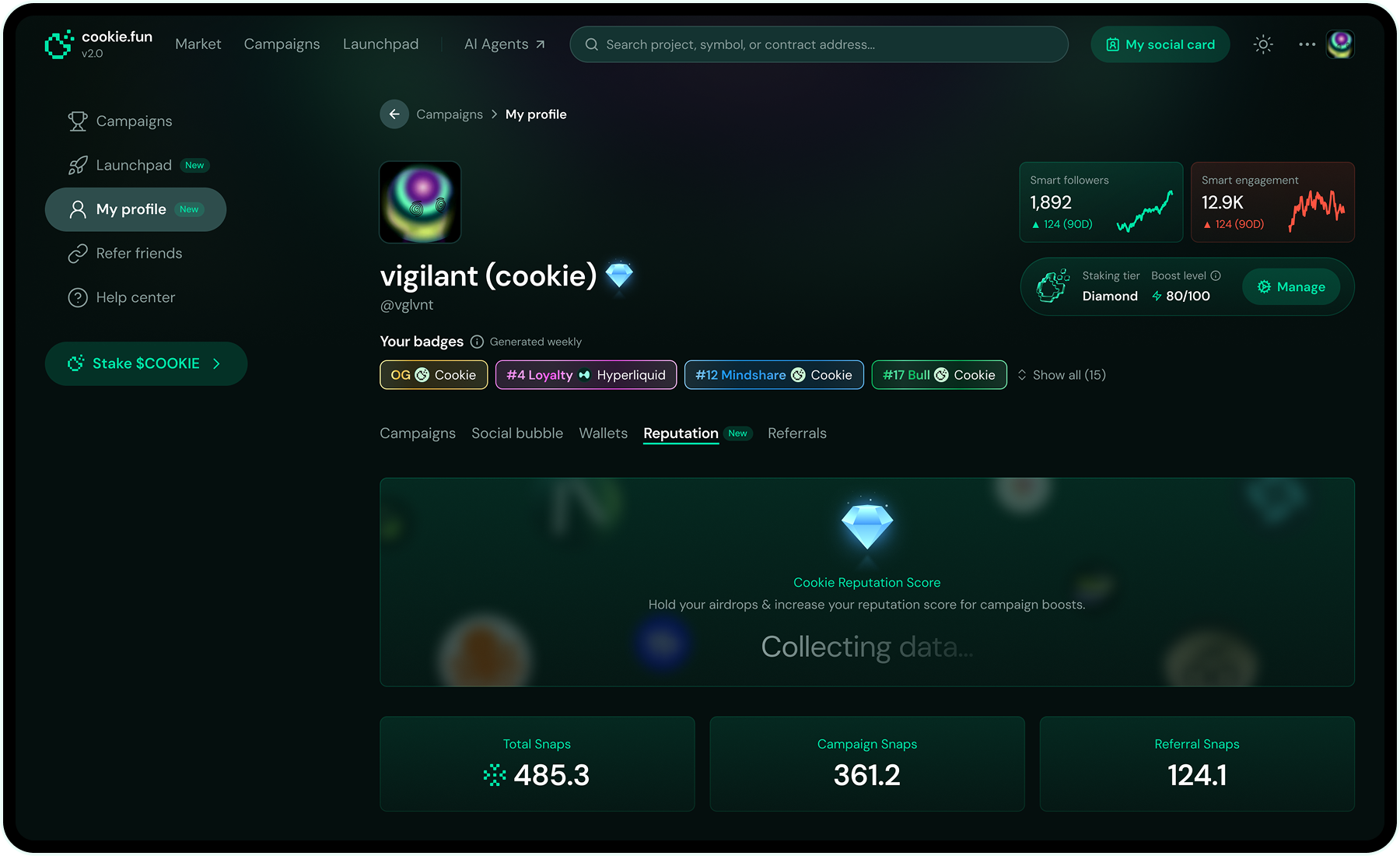
The whole platform got a proper redesign here, finally off the borrowed B2B system. Snaps got rebuilt into the platform instead of sitting on top. One language, one set of pieces, one product.
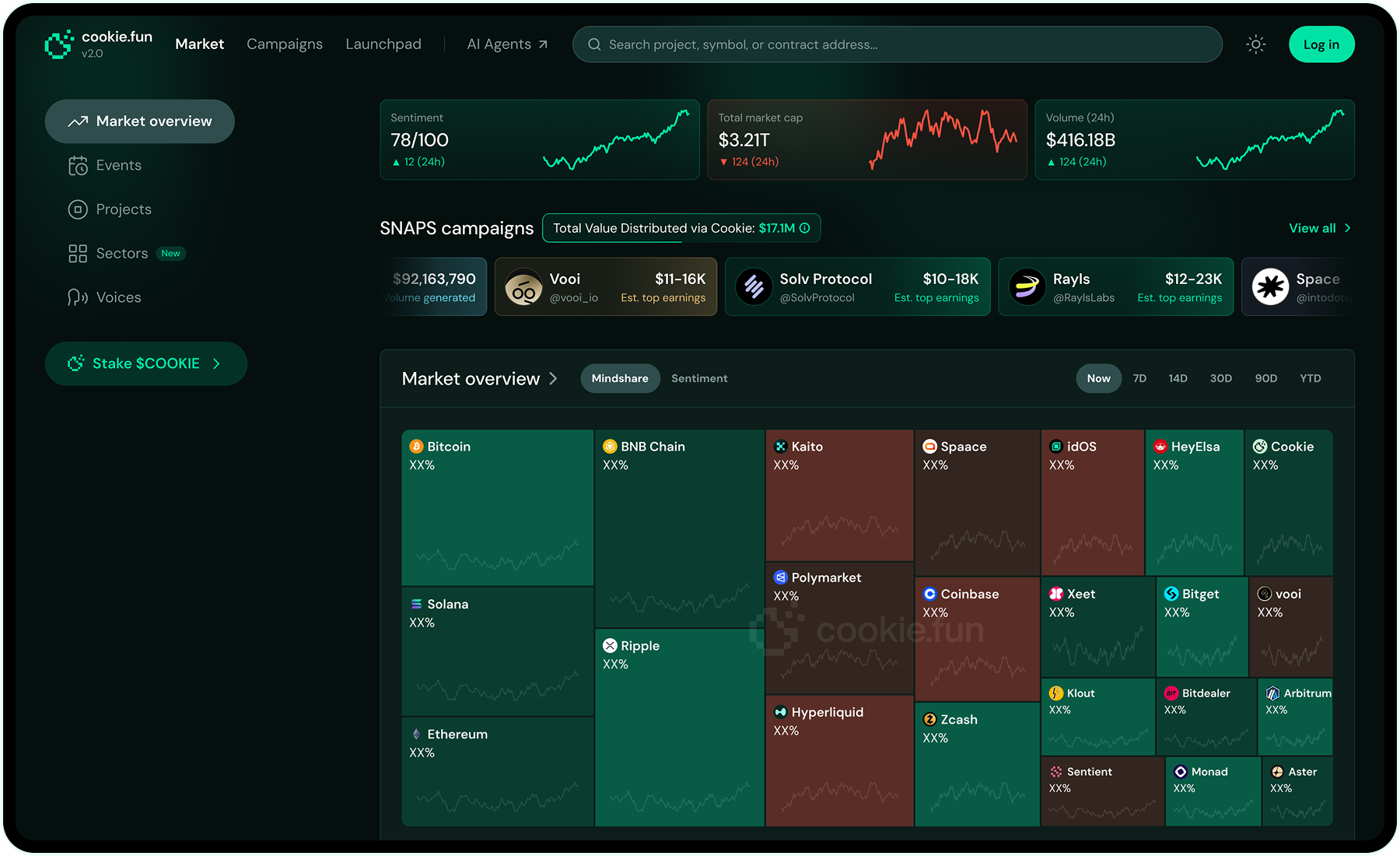
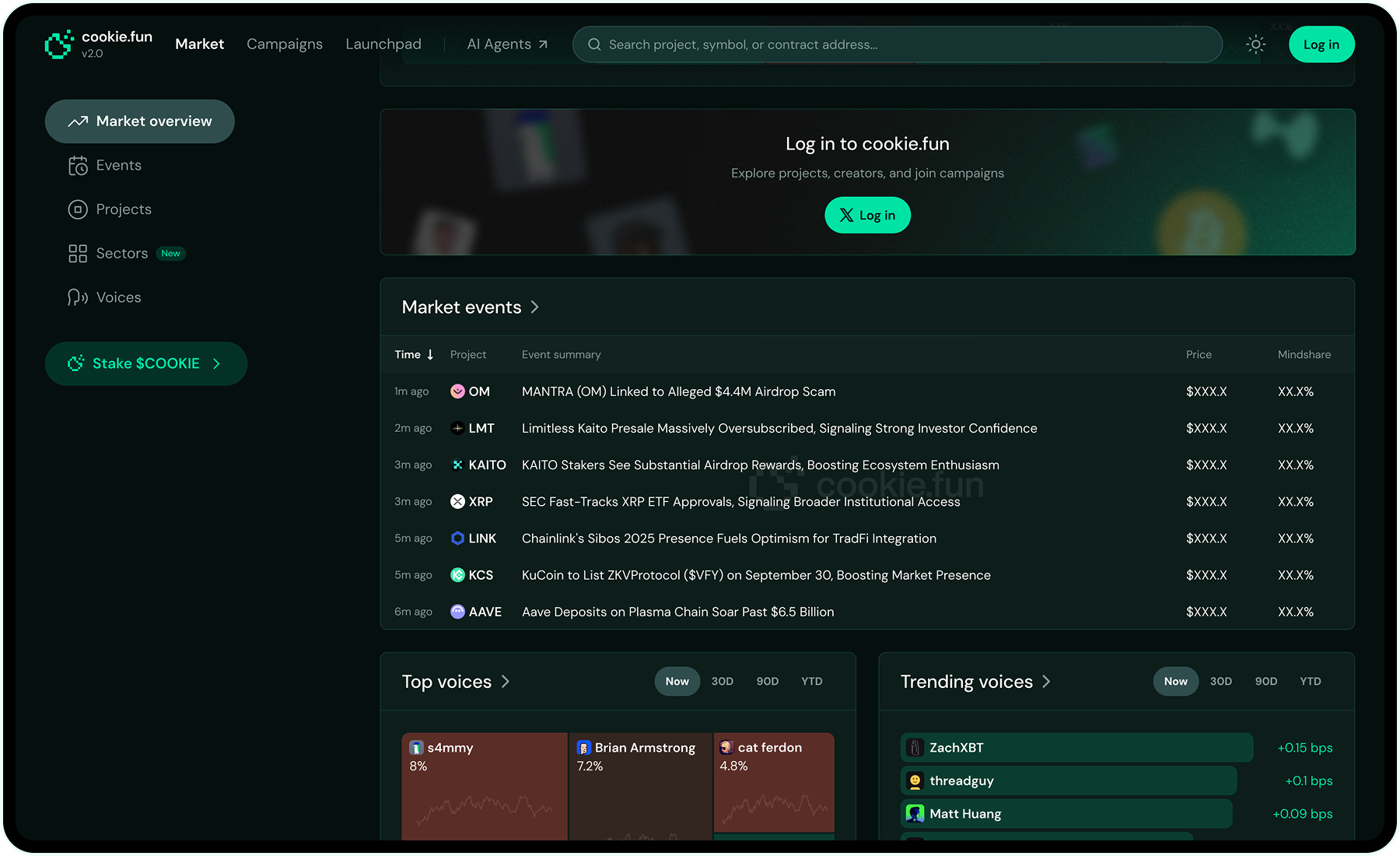

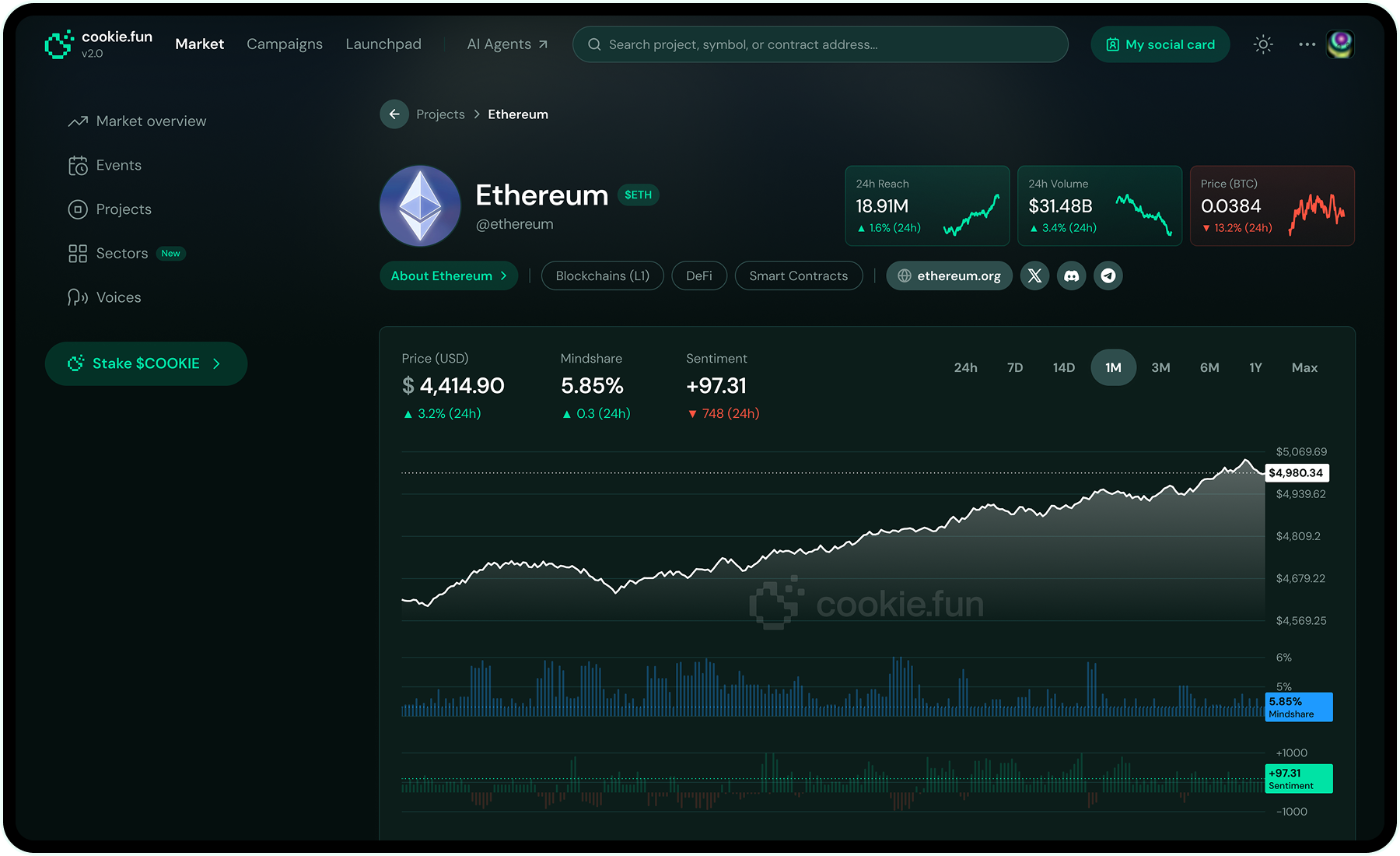
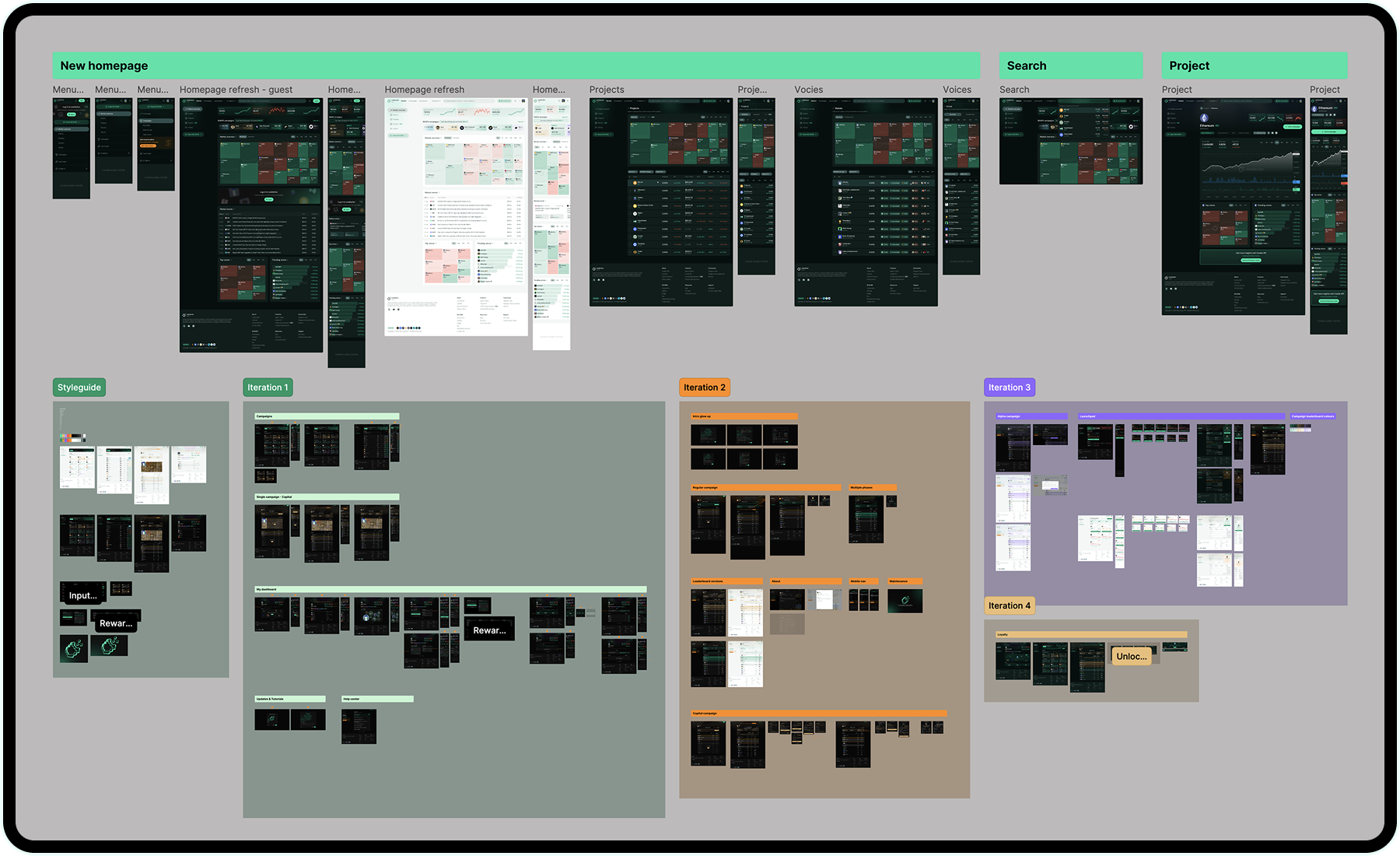
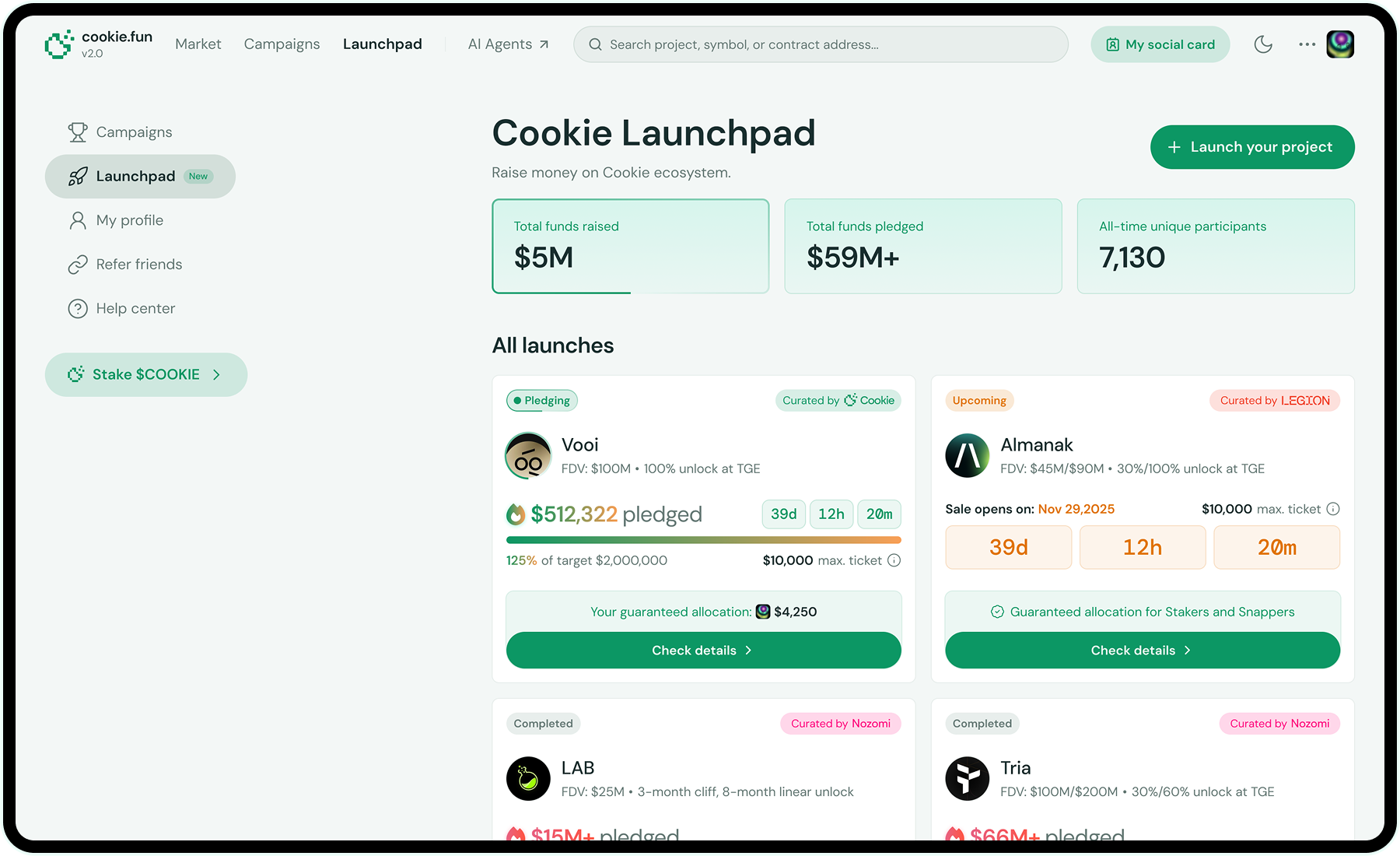
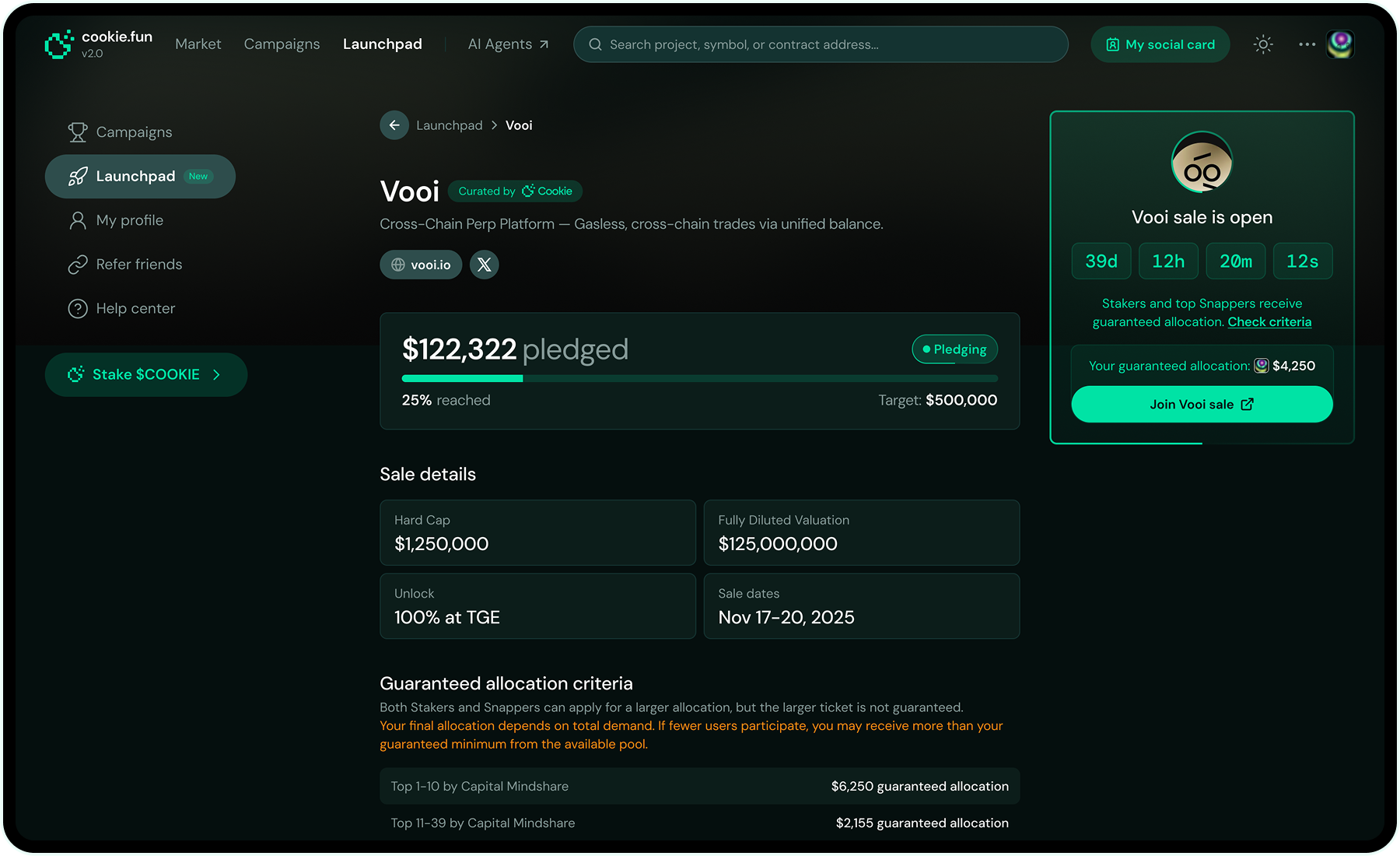
The launchpad came out of all this. We held a big chunk of the InfoFi market by then, which let us partner with Legion.cc to give top creators pre-sale access. We sold it to projects already running campaigns — not just upselling Capital Mindshare, but helping them raise on our platform, with top creators getting guaranteed allocations. Attention became leaderboards, leaderboards became campaigns, campaigns became raises.
Reflection
cookie.fun started as a few days of work to catch a trend and became a full ecosystem — attention, revenue, token utility, a launchpad — all finally speaking one design language.
Three things stuck with me:
- When you're chasing a narrative, how the product spreads beats how it looks. Screenshot-readiness and watermarks did more for us than any growth feature.
- Revenue layered on something people already use beats a separate product. Snaps worked because the audience was already there — and the token mattered once it became load-bearing.
- And maturing a viral product mostly means putting back the discipline you skipped to move fast. Capital Mindshare wasn't a new feature. It was making conviction count again after people learned to game the old system.

Tim was our Lead Product Designer at Cookie, where he played a key role in translating complex, data-heavy product concepts into clean, intuitive user experiences. He combines strong UX thinking with sharp UI execution and real ownership over product outcomes. I can confidently recommend him to any team building serious, high-impact products.Read detailed reference